 Customer portal
Curious to learn more? View our most recent customer stories and discover how Kooi can elevate your security needs to the next level.
Sector: Bulk storage
Customer: Wijnne Barends Logistics
Location: The Netherlands
Sector: Bulk storage
Customer: Wijnne Barends Logistics
Location: The Netherlands
/NL/Klantverhalen/Wijnne%20barends3.png?width=1800&height=1250&name=Wijnne%20barends3.png)
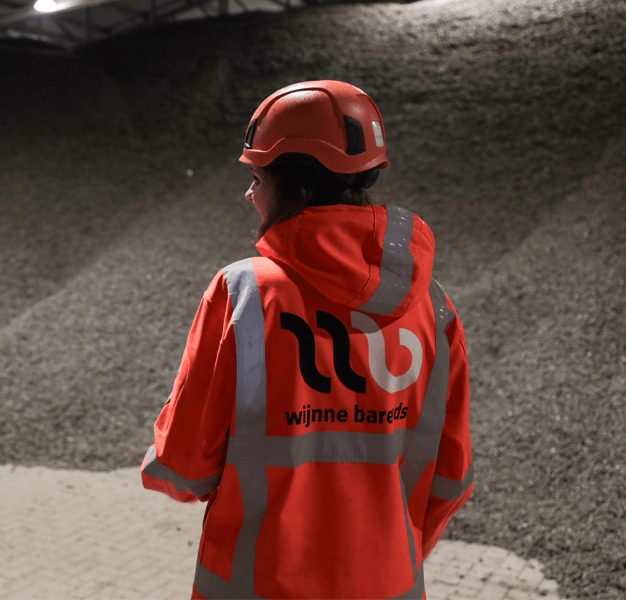
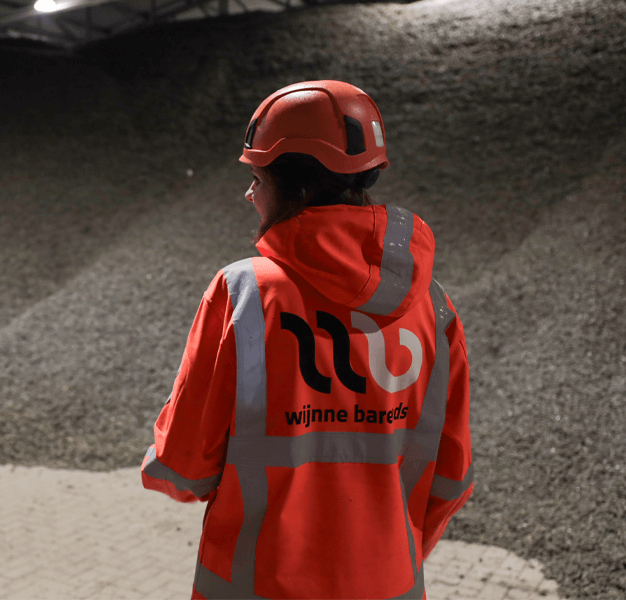
Before Wijnne Barends chose the RED system, temperature in bulk storage was measured manually using a thermal lance and temperature gauge. By inserting the lance into the bulk pile, temperature was checked at specific points, a method that works, but also has limitations.
Measurements are local and time-bound. You only measure one location at a time, at one specific moment. In large bulk piles, where temperature development can form deep within the core and slowly shift, much of the storage effectively remains out of sight. Additionally, the process is time-consuming, not always safe to perform, and dependent on physical presence. In a dynamic logistics environment, this is difficult to maintain structurally. Daphne recognizes this challenge. “Manual measurement provided insight, but not a complete overview. You know what is happening at that moment in that specific spot. But you don’t have a continuous picture. And with self-heating, the situation can develop between two measurement moments.”
In bulk goods, temperature development often occurs gradually. A small hotspot deep within the core of the storage can expand unnoticed. If self-heating is not detected in time, the temperature can rise to the point of ignition. In large bulk piles, fire then spreads quickly. Fire sources are difficult to access and challenging to extinguish completely. The consequences are significant:
For a logistics organization with multiple locations and continuous goods flows, this scenario has major consequences. Daphne emphasizes that experiences within the sector have further increased awareness. “We have seen how quickly things can escalate. That’s when you realize you need to look beyond periodic inspections. You need to know earlier what is happening.” There was a growing need for a solution that does not rely on spot checks but provides continuous insight.
By deploying the RED system, Wijnne Barends moved from local measurements to 24/7 thermal monitoring. RED continuously scans the entire storage area using thermal imaging technology. Temperature deviations are immediately detected and automatically forwarded to the Kooi Alarm Center. There, specialists assess the alert and, if necessary, initiate immediate follow-up action.
According to Harry Kooistra, the difference lies in scale and timing. “Where a lance measures one point, we continuously monitor the entire surface. We detect deviations at an early stage, even before there is smoke or visible development.” This shifts the approach from sample-based inspection to integral monitoring.
For Wijnne Barends, this primarily means certainty. Daphne notes that the biggest difference lies in continuity. “We are no longer dependent on measurement moments. We have 24-hour insight into temperature developments and can rely on the Kooi Alarm Center. That provides peace of mind and control.”
/NL/Klantverhalen/Wijnne%20Barends1.png?width=1920&height=1080&name=Wijnne%20Barends1.png)
In addition to immediate detection, RED provides structural data. Temperature trends are recorded, making patterns visible and allowing processes to be optimized in a targeted way.
Harry sees this as an important development in fire prevention. “You make safety measurable. Instead of assumptions or snapshots, you work with data. That helps organizations make well-founded decisions.” For Wijnne Barends, this aligns with their broader vision of risk management: safety must be demonstrable, structural, and future-proof.
With the transition from manual measurements to continuous thermal monitoring, temperature development in bulk storage is no longer a snapshot but a continuously monitored process. Where previously specific spots were measured with a lance, the entire storage area is now thermally monitored 24/7. Deviations are automatically detected and assessed by specialists at the Kooi Alarm Center. This means someone is always watching, even outside working hours.
For Daphne, this is where the greatest value lies. RED not only provides insight, but above all peace of mind. The confidence to close a location and go home knowing that temperature developments are continuously monitored. “I can close the site and go home with the confidence that someone is always watching. That gives a completely different sense of control.”
Harry emphasizes that this is precisely the purpose of early detection. “Safety should not create tension, but trust. By continuously monitoring and immediately verifying deviations, we ensure that organizations do not have to wait for an incident before taking action.”
For Wijnne Barends, this means that fire safety is no longer dependent on spot checks or physical presence. It is structurally secured, 24/7, day and night. The risk will never disappear completely. But with 24/7 monitoring, it is manageable. And that is exactly what provides peace of mind.
Curious to learn more? View our most recent customer stories and discover how Kooi can elevate your security needs to the next level.
/COM/5.%20Resources/Case%20studies/Renew-Secure-RED-continuous-alert-on-heat-detection_smal.png)
/COM/5.%20Resources/Case%20studies/Waste-processor-AVR-swears-by-RED-I-wouldnt-know-why-you-wouldnt-do-it_small.png)